Environmental Sustainability
Sustainability is now a strategic imperative. Leading organizations balance ESG responsibility with innovation and performance—creating long-term value while building a more resilient, sustainable future.
Driving Impact Through Sustainability
Sustainability is no longer optional—it’s a business imperative. We help organizations integrate sustainable practices across their operations, achieve environmental goals, and support vulnerable communities, creating lasting impact for people and the planet.
What Environment Means for Business
Sustainability is no longer a side initiative—it is a core driver of growth, competitiveness, and operational strength. Forward-thinking companies embed environmental principles into strategy, product design, supply chains, and day-to-day operations. By reducing impact and improving resource efficiency, organisations unlock new value, strengthen resilience, and earn the trust of customers, regulators, and investors. Environmental performance is now directly linked to business performance.
Turning ambition into impact, however, requires practical pathways, credible data, and cross-functional alignment. Success comes from setting realistic goals, mobilising teams, and partnering with experts who can translate environmental commitments into measurable outcomes. With the right strategy, technology, and collaboration, organisations can create meaningful change while accelerating sustainable growth.
Environmental leadership isn’t just about protecting the planet—it’s about building businesses that are resilient, relevant, and ready for the future.
Our Support for a Sustainable Environment
SEBLEU helps organizations build resilient, future-ready operations by embedding sustainability across the value chain—from planning and sourcing to delivery and impact measurement. We guide corporate, public, and private sector clients in identifying risks, unlocking opportunities, and driving long-term environmental and business value.
ESG Reporting
ESG reporting is more than compliance—it’s a strategic tool to demonstrate progress, accountability, and impact. By aligning reporting with your sustainability goals, you show how your organization is managing ESG risks, seizing opportunities, and creating lasting value for stakeholders and society.
Investing with Impact
The idea that impact comes at the cost of returns is fading. Businesses and investors now recognize that long-term value depends on a thriving society and planet. With rising focus on climate, human rights, and equality, impact investing is accelerating—aligning purpose with performance and advancing the UN Sustainable Development Goals.
Legal and ESG
Legal functions now play a vital role in advancing ESG goals—moving beyond compliance to help shape strategy and manage growing risks. With rising stakeholder expectations and evolving regulations, ESG has become a core focus for legal teams, driving demand for specialized expertise and integrated, impact-driven solutions.
Making the Transition to Net Zero
Climate action can’t wait. Achieving net zero requires bold collaboration, innovation, and urgency from businesses, governments, and society.
At SEBLEU, we combine smart technologies with deep expertise to help organizations embed sustainability into transformation—identifying risks, unlocking opportunities, and driving measurable impact. The path to a resilient, low-carbon future starts now.
Supply Chain & Operations
Today’s businesses are expected to run efficient, responsible supply chains that benefit both the environment and the communities they touch. By understanding these impacts, companies can strengthen strategy, improve operations, and enhance financial performance.
SEBLEU helps assess and manage supply chain risks, define sustainable supplier standards, and integrate ESG best practices. From measuring environmental impact to redesigning global operations for efficiency and resilience—we help align your supply chain with both sustainability and business goals.
Sustainable Development Goals (SDGs)
Taking action on the SDGs means aligning business strategy with global impact. With 17 goals and varying national priorities, businesses must understand where they can contribute most—both within their operations and across their supply chains and markets.
Success starts with identifying how your business affects each goal, then targeting the initiatives that create the greatest positive impact or reduce harm. It’s about making informed, strategic choices that drive meaningful progress—for your business and for the world.
.
Strategic Sustainability
Sustainability is now a core business priority—shaping strategy, managing risk, and unlocking competitive advantage. Leaders must balance compliance, brand protection, and resilient supply chains with growth and long-term value creation.
We help organizations define their sustainability vision, align it with strategic goals, and build actionable roadmaps with clear priorities, KPIs, and measurable outcomes—turning sustainability from a challenge into a strategic asset.
Total Impact Measurement & Management (TIMM)
Business success today means creating inclusive, responsible, and lasting impact. SEBLEU’s TIMM framework goes beyond financials—measuring and valuing social, environmental, and economic outcomes.
By using TIMM, companies gain a holistic view of their true impact—helping leaders assess risks, spot opportunities, and make decisions that balance profit with purpose.
Tax and ESG
Tax is not just a financial obligation—it’s a key pillar of a business’s societal impact and ESG strategy. As governments push for net-zero goals and sustainable growth through tax policies and incentives, companies are rethinking how tax supports their broader transformation.
With rising demands for transparency from investors, regulators, and consumers, tax is becoming central to ESG planning—impacting everything from investment and supply chains to workforce strategy. A well-aligned, transparent tax approach builds trust and drives long-term value.
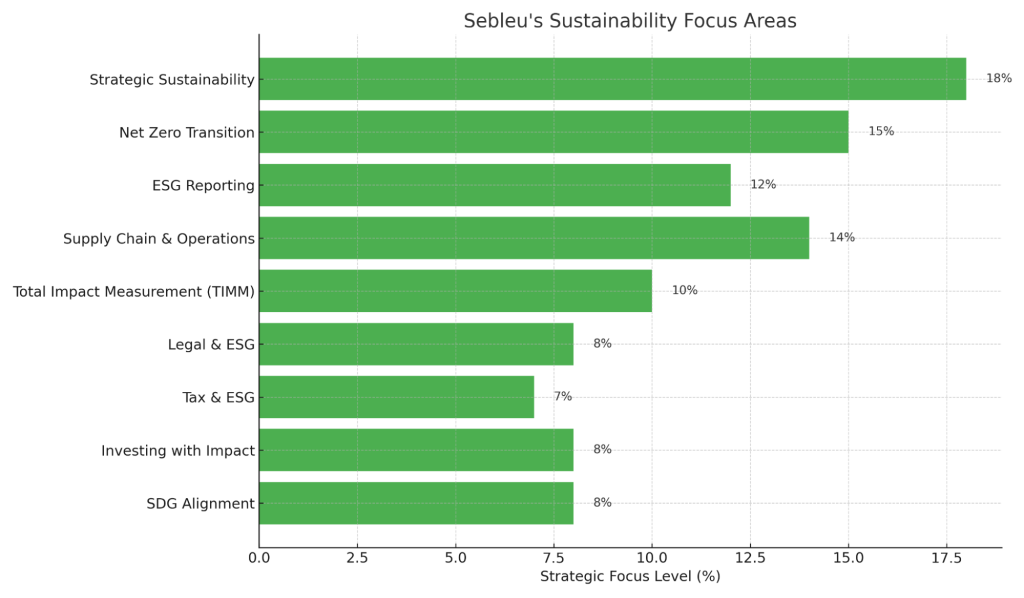
At Sebleu, we help organizations turn sustainability into strategy—embedding ESG, impact measurement, and climate goals across operations and value chains. From net-zero transitions to responsible supply chains and transparent reporting, we guide leaders in creating measurable environmental, social, and business value.
The Benefits of Environmental Sustainability
Environmental sustainability enhances quality of life while preserving ecosystems. More businesses are embedding it into their models—not just as a responsibility, but as a competitive advantage. Today, it’s a top CEO priority, offering benefits such as reduced risk, improved brand trust, regulatory alignment, operational efficiency, and long-term value creation.
Boosts Efficiency and Reduces Costs
Sustainability drives smarter operations—cutting waste, saving energy, and streamlining processes. Whether through energy-efficient systems or resource-conscious practices, it lowers costs and lifts productivity across the business.
Attracts Top Talent and Conscious Investors
Environmentally responsible companies appeal to purpose-driven talent—especially younger generations who value sustainability. At the same time, investors are prioritizing ESG metrics like carbon impact and waste reduction, viewing green, forward-thinking businesses as more resilient and profitable in the long term.
Enhances Brand Reputation and Drives Profit
Consumers increasingly favor brands that prioritize sustainability and community impact. Companies that demonstrate environmental responsibility earn greater trust, deeper loyalty, and stronger sales—proving that doing good also drives profitability.
Sustainable Waste Management Solutions
From recycling to zero-waste initiatives, reducing waste is now a core business priority. Companies are designing smarter systems, using efficient materials, and turning waste into energy—cutting environmental impact while boosting sustainability and performance.
Achieve Zero Waste-to-Landfill
Perfect for food-heavy industries, waste digesters turns food waste into liquid for easy sewer disposal. It’s efficient, low-cost, and comes in various sizes—no upfront investment needed. A smart step toward zero waste.
Environmental sustainability is no longer just a responsibility—it’s a competitive advantage. It reduces risk, lowers costs, and builds trust with conscious consumers, investors, and employees. Businesses that lead sustainably don’t just protect the planet—they drive lasting growth.
Environmental Sustainability for Responsible, Future-Ready Transformation
Sebleu’s Environmental Sustainability services integrate climate intelligence, ESG strategy, and circular design into enterprise operations. Our end-to-end solutions help organizations measure, reduce, and lead with impact—turning sustainability from obligation into advantage.

Carbon Intelligence
Accurately measure and reduce emissions across entire operations and supply chains. We track Scope 1, 2,…

ESG Reporting
Ensure regulatory alignment and transparency with audit-ready ESG reporting. Our platform automates disclosures, tracks KPIs, and…

GreenOps
Reduce environmental impact through process redesign and efficiency. We identify energy, water, and resource waste across…

Climate Resilience
Prepare for climate shocks and develop future-ready adaptation strategies. We model environmental risks and guide mitigation…
Product Sustainability
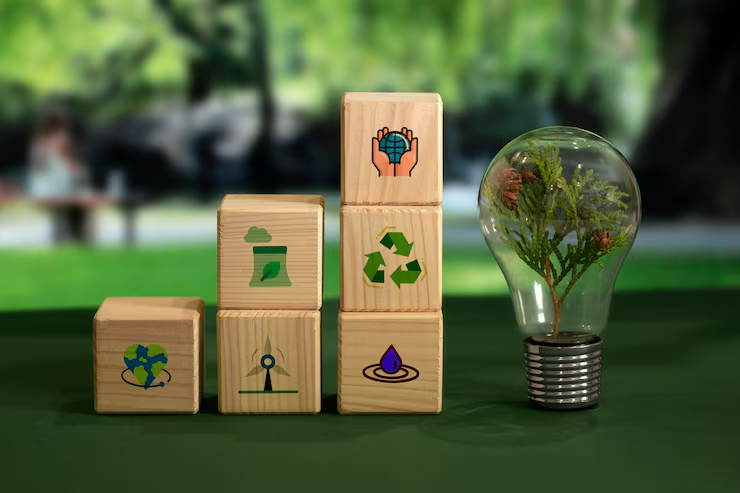
Embed eco-design principles and lifecycle analysis into product development. Our tools measure material impact, recyclability, and…
Sustainable Supply Chains
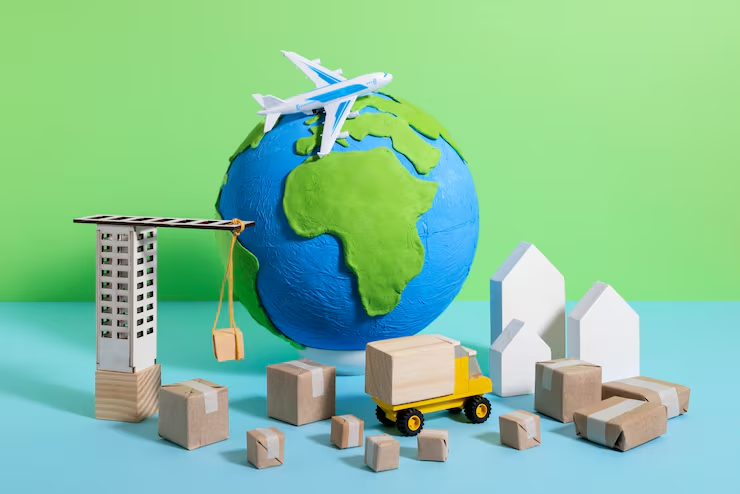
Optimize upstream and downstream impact across partners and vendors. We map supplier emissions, enforce sustainable procurement,…
Trendsetting Our Environmental Solutions
Latest trends in environmental sustainability include net-zero strategies, circular economy models, climate risk analytics, nature-based solutions, and green supply chains—redefining how organizations reduce impact, build resilience, and lead in a low-carbon, resource-conscious world.
Sorry, there are no posts at this time.
More Post
Sorry, there are no posts at this time.
Ready to Lead the Transformation?
Addressing climate change demands a new kind of leadership—bold, collaborative, and future-focused. It’s time to move beyond commitment and drive real action toward a more resilient and sustainable world.
Proven Outcomes in Environmental Sustainability
Organisations work with Sebleu to cut emissions exposure, strengthen reporting readiness, redesign resource use, and build more resilient operations in a world shaped by climate pressure, regulatory change, and supply-chain volatility. By combining carbon intelligence, climate strategy, circular design, and sustainable supply-chain visibility, Sebleu helps organisations turn sustainability into a practical driver of operational strength and long-term competitiveness.
The Intelligence Lab Podcast
Where Science, Systems, and Signals Intersect
Tune in to deep, future-focused conversations exploring AI, data, quantum, blockchain, and the technologies reshaping industries and society.