Distributed Cloud Infrastructure
Distributed cloud enables smarter, more resilient IT systems—bringing cloud services closer to users and data sources for faster performance, real-time insights, and enhanced security. It's the next step in building adaptive, self-managing digital infrastructure.
Build a Future-Ready Infrastructure
Your IT infrastructure powers your business—fueling user experiences and critical operations. But legacy systems can’t keep up with today’s speed of change. It’s time to shift from hardware-heavy setups to agile, intelligent, software-defined infrastructure—ready to scale, adapt, and lead.
What is Distributed Cloud Infrastructure ?
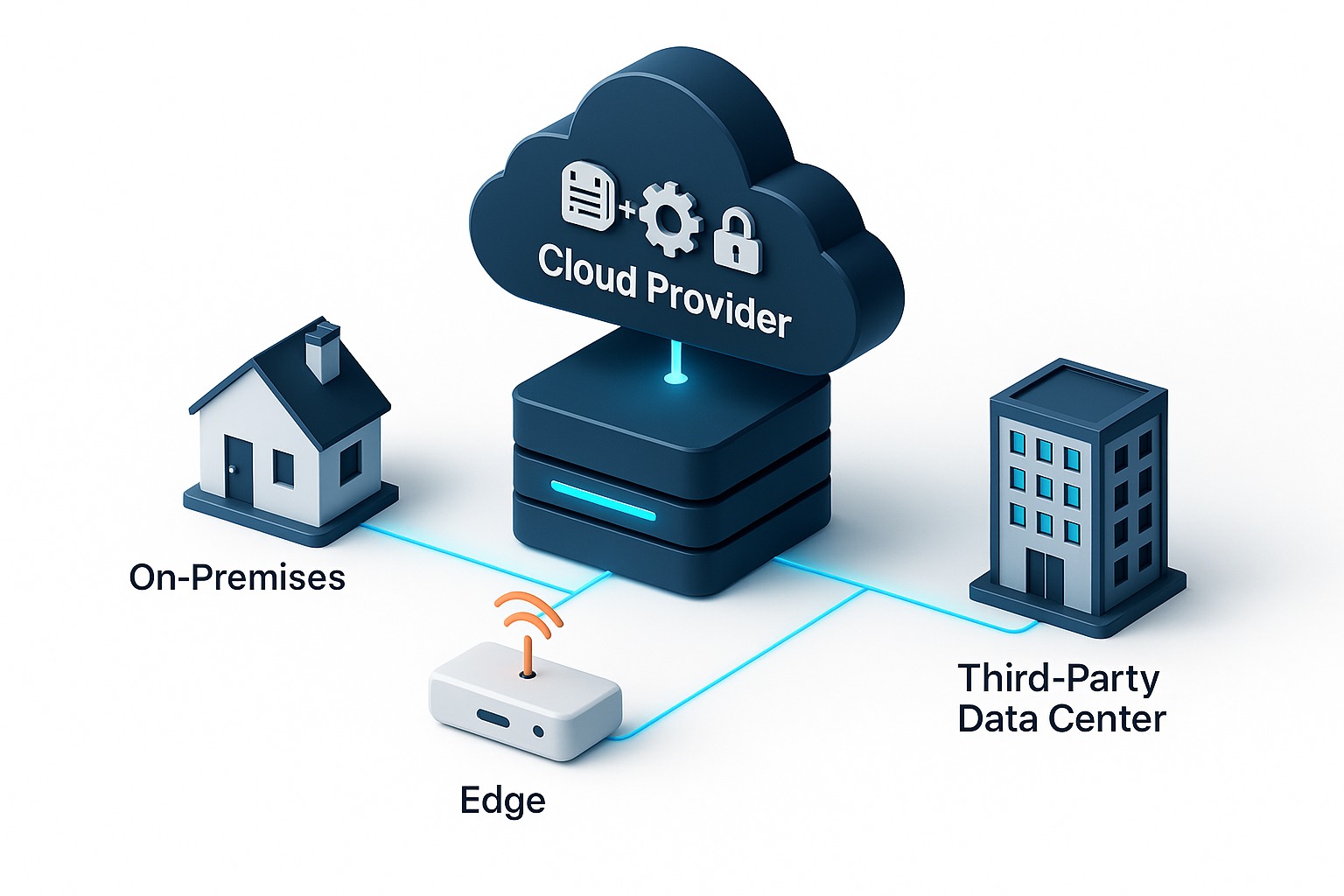
Distributed cloud infrastructure extends public cloud services across multiple locations—including on-premises, third-party data centers, or edge sites—while being managed from a single control point. It lets businesses run applications wherever needed for performance, compliance, or latency—without the complexity of traditional hybrid or multi cloud setups.
This model is ideal for supporting real-time applications like IoT, AI, and telecom, and enables faster, more secure computing closer to the data source.
How Distributed Cloud Works
Distributed cloud takes the concept of distributed computing to the next level by extending a cloud provider’s full infrastructure stack to multiple physical locations—on-premises, at the edge, or in third-party data centers—while maintaining centralized control.
It allows businesses to deploy cloud services wherever needed, while the cloud provider handles operations, security, updates, and compliance from a unified control plane. This model simplifies hybrid and multicloud management by creating a seamless, single-cloud experience across distributed environments.
Distributed Cloud Meets Edge Computing
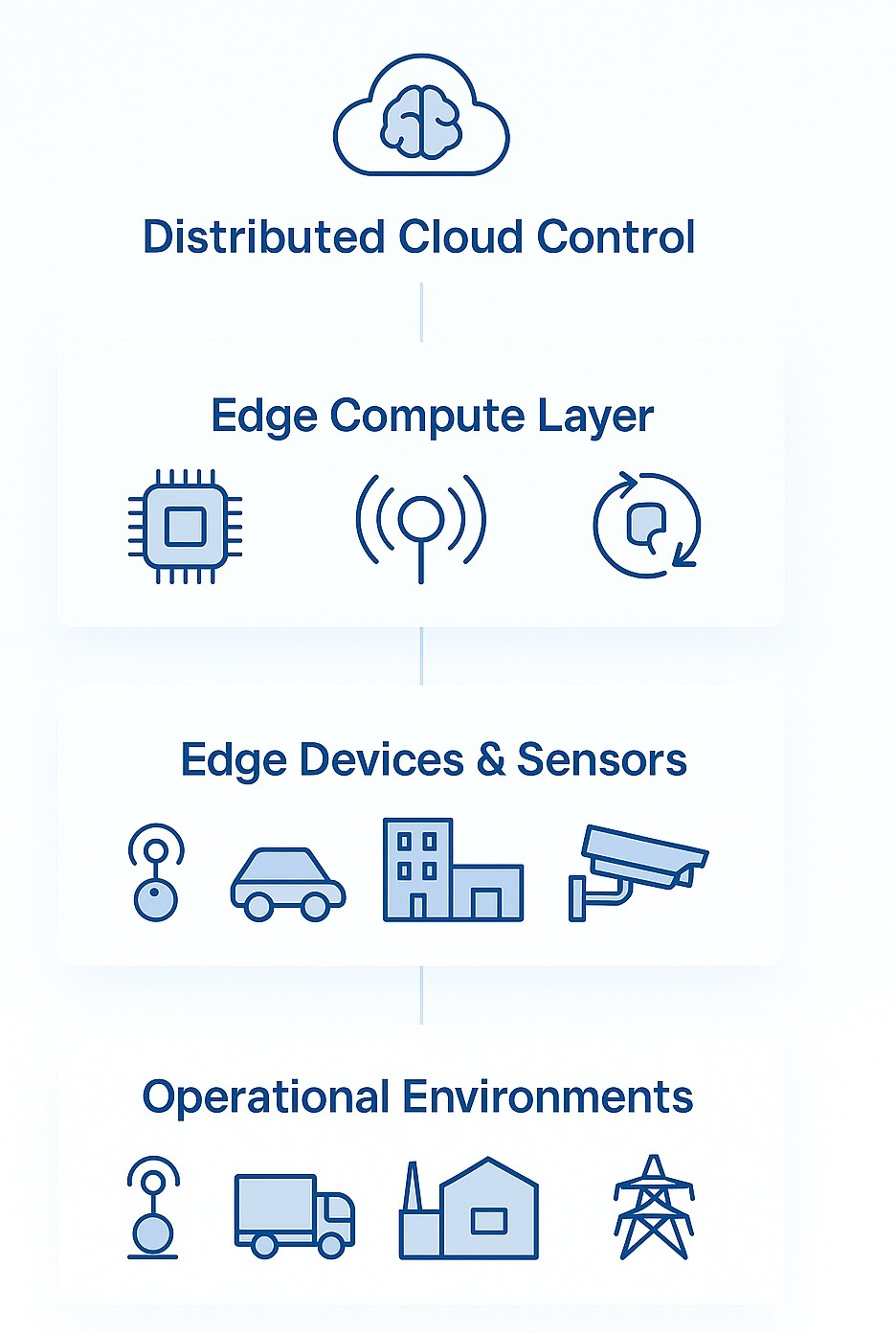
Edge computing brings computation closer to where data is created—such as factory sensors, mobile devices, and smart cameras—enabling real-time processing with minimal latency. Rather than moving data back and forth, intelligence is applied directly at the source, supporting faster decisions and responsive operations.
Distributed cloud extends this capability by providing a unified control layer across edge environments. Instead of managing fragmented systems, organizations can deploy, monitor, and scale workloads consistently across all locations—combining local execution with centralized governance to drive performance, resilience, and operational simplicity at scale.
Benefits of Distributed Cloud Infrastructure
Distributed cloud infrastructure brings computing closer to where data is generated—boosting performance, resilience, and flexibility across industries. Key advantages include:

Scalability Without the Overhead
Expand to new locations without the cost and time of building new data centers.
Faster, Smarter Response
Processing data closer to users reduces latency and enhances real-time experiences in everything from streaming to smart cities.
Stronger Compliance
Easily meet local data residency laws by processing sensitive data within national boundaries.
Built-in Resilience
Supports robust business continuity and disaster recovery with infrastructure that can adapt and reroute on demand.
Edge-Ready for IoT
Power intelligent edge applications like autonomous vehicles, video analytics, and real-time health monitoring with low-latency processing where it’s needed most.
Connected Infrastructure for a Distributed Future
Sebleu’s Distributed Cloud Infrastructure capabilities enable enterprises and governments to run intelligent, secure, and flexible systems across hybrid, edge, and sovereign environments. We help modernize operations through seamless orchestration, real-time AI deployment, and compliance-driven architecture. With latency-aware compute placement and federated data control, Sebleu powers continuity, autonomy, and global scalability.

Edge-to-Cloud Orchestration & Management
Sebleu enables seamless deployment, monitoring, and policy enforcement across edge and cloud environments. Our orchestration systems…

Latency-Sensitive AI Workload Placement
Deploy AI models at the optimal node—whether edge or cloud—based on latency, throughput, and cost. Sebleu’s…

Multi-Jurisdictional Cloud Sovereignty
We help you navigate compliance and governance by architecting data flows and hosting based on residency…

Zero-Trust Security for Distributed Systems
Security is redefined for distributed infrastructure—identity, verification, and encrypted transactions across nodes. Sebleu’s zero-trust framework ensures…
Hybrid Cloud Resource Optimization
Sebleu enables intelligent provisioning and cost optimization across public, private, and on-premises resources. Real-time usage analytics…

Autonomous Networked Device Intelligence
Enable autonomous operations across connected devices with embedded analytics and local AI models. Sebleu powers edge-native…

Disaster Recovery & Continuity Assurance
Sebleu builds distributed systems with automated recovery, backup, and failover mechanisms. Ensure minimal downtime, data protection,…

Federated Data Architecture and Compliance
Govern data sharing and access across cloud boundaries while preserving privacy. Sebleu’s federated data mesh allows…
Trendsetting Our Distributed Cloud Solutions
Latest trends in distributed cloud solutions include edge-native applications, sovereign cloud architectures, AI-optimized infrastructure, and zero-trust security models. These innovations are redefining how organizations operate—enabling real-time responsiveness, regulatory compliance, and intelligent automation at scale.
Featured Post

More Post

Distributed Cloud Infrastructure for Industry-Driven Innovation
Cloud is no longer just an IT upgrade—it’s a catalyst for business transformation. We help organizations align cloud strategies with business goals to unlock agility, accelerate innovation, and drive faster time-to-market. With secure, scalable, and intelligent distributed cloud architectures, companies can overcome legacy limitations, meet evolving data sovereignty demands, and create a resilient foundation for digital growth.

Proven Outcomes in Distributed Cloud Infrastructure
Organisations work with Sebleu to run critical systems across hybrid, edge, and sovereign environments with greater control, lower latency, and stronger continuity. By combining distributed orchestration, workload placement, zero-trust security, recovery design, and federated data governance, Sebleu helps enterprises and governments modernise infrastructure without losing resilience, compliance, or operational flexibility.
The Intelligence Lab Podcast
Where Science, Systems, and Signals Intersect
Tune in to deep, future-focused conversations exploring AI, data, quantum, blockchain, and the technologies reshaping industries and society.